

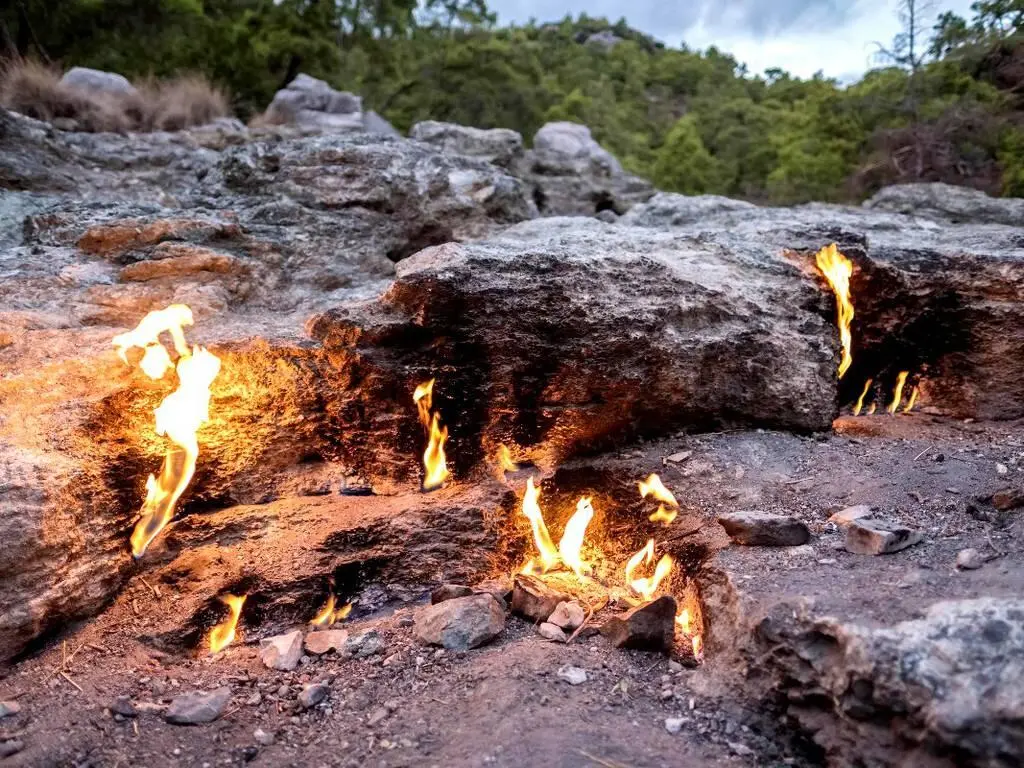
In the realm of Greek mythology, tales abound of extraordinary creatures and phenomena—winged stallions, minotaurs, and gods with thunderous tempers. Yet few mythical sites blur the line between legend and reality as convincingly as Mount Chimaera, now known as Yanartaş, in southwestern Turkey. This ancient and enigmatic destination has captivated imaginations for millennia, thanks to the eternal flames that rise from its rocky slopes—a phenomenon so striking that even skeptical ancient writers struggled to explain it.
“There is a great opening in the earth, from which fire emerges,” noted the ancient writer Palaephatus in On Incredible Things. “The name of this mountain is Chimaera.” His account reflects not pure myth, but observation—because Yanartaş continues to burn just as it did in antiquity, its natural flames flickering perpetually across the mountainside. Nestled within Olympos Beydağları National Park near Antalya, this extraordinary site sits at the intersection of natural wonder, ancient history, and mythic imagination.
The Wonders of Yanartaş
Olympos Beydağları National Park, home to Yanartaş, is a landscape of rugged peaks, crystal-clear coves, and dense Mediterranean forest. Yet even among such beauty, the flames of Yanartaş stand apart as something truly otherworldly.
Visitors reach the site via a short hike through fragrant pine woodland, gradually ascending to a rocky plateau where small tongues of fire emerge directly from the ground. The faint scent of natural gas lingers in the air, mixing with the sound of cicadas, heightening the sense of stepping into something ancient, elemental, and almost unreal.
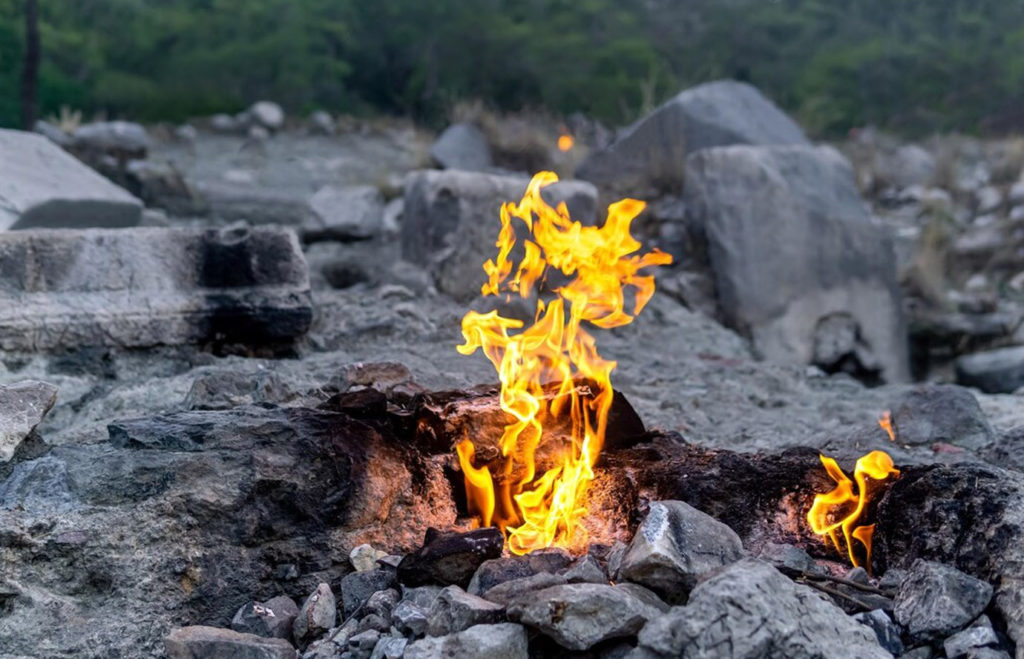

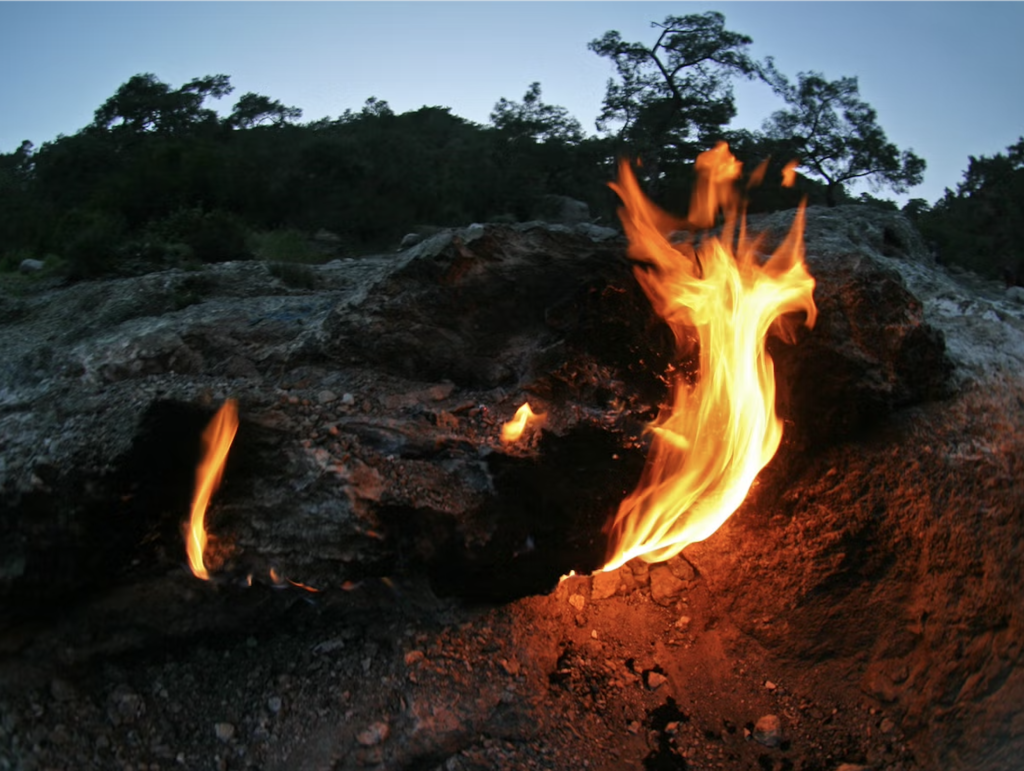
This natural phenomenon is caused by methane gas seeping through fissures in the Earth’s crust and igniting on contact with oxygen, producing the site’s eerie, perpetual flames. The gas is generated deep underground through geological processes involving ultramafic rocks, where heat and water interact to release hydrocarbons over time. As the methane escapes through the fractured surface, it sustains a series of small, self-fuelling fires—making Yanartaş one of the world’s rare and most consistent natural flame sites.
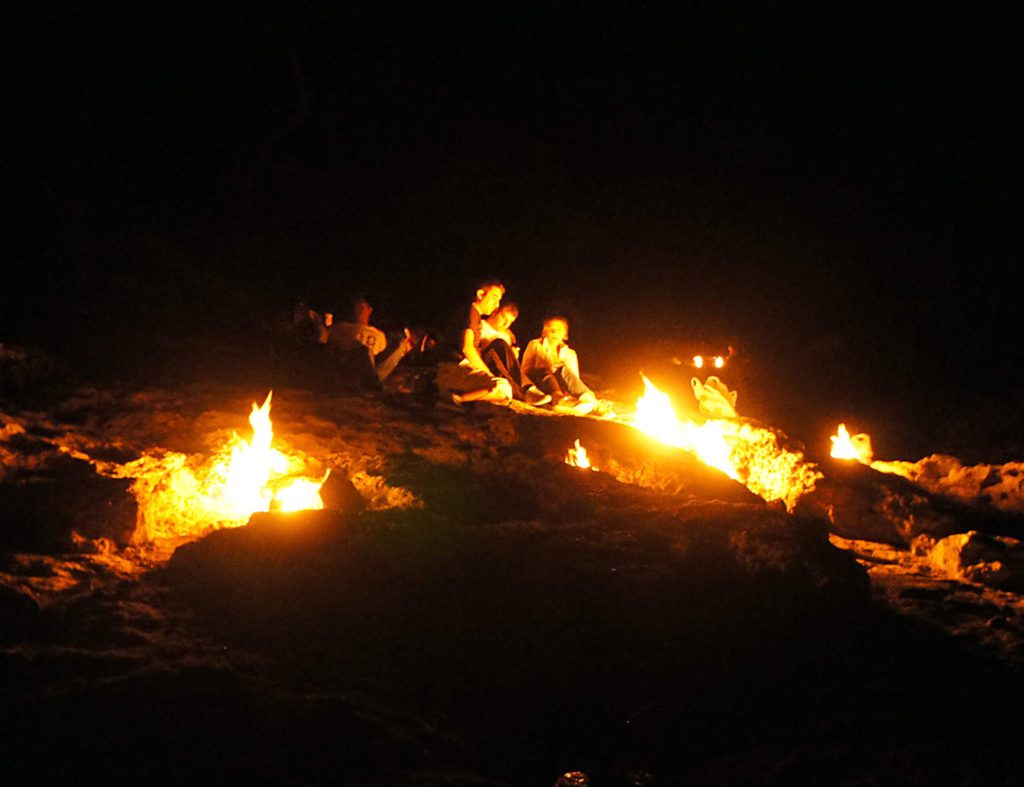
“It’s like nothing else,” says Ibrahim Genc, a Turkish tour guide of over 25 years who regularly leads visitors to Yanartaş. “The flames are so steady that I joked we could cook kebabs here, though, of course, grilling is prohibited.” Beyond its scientific intrigue, the site reveals an almost hypnotic beauty: the flames burn most vividly after dusk, casting an ethereal glow against the backdrop of distant turquoise seas.
The Myth of the Chimaera: Fact or Fiction?
To ancient eyes, these fires must have appeared nothing short of miraculous. Indeed, the mountain’s mythological associations run deep. Greek mythology tells of the Chimaera, a fire-breathing beast said to have terrorised the region of Lycia—widely believed to have been inspired by the fiery landscape of Yanartaş. As described in ancient tradition and later attributed to Hesiod, the Chimaera was a fearsome hybrid: “In her forepart, she was a lion; in her hinderpart, a dragon; and in her middle, a goat, breathing forth a fearful blast of blazing fire.”
The legend centres on the hero Bellerophon, who—riding the winged horse Pegasus—was commanded by King Iobates of Lycia to slay the creature. According to Homer’s Iliad, Bellerophon, guided by divine favour, ultimately prevailed. Yet over time, scholars have suggested that the story may be metaphorical: rather than a literal beast, “slaying the Chimaera” could symbolise the human attempt to confront and understand the volatile, fire-emitting mountain itself, making the surrounding land habitable.
Later writers, including Isidore of Seville, echoed this interpretation, proposing that Bellerophon’s victory may have represented the taming or rationalisation of a natural phenomenon—transforming a geological mystery into myth.
Practical Tips for Visiting Yanartaş
Yanartaş is a year-round destination, but local guide Ibrahim Genc, who has been leading visitors there for over 25 years, recommends visiting between mid-September and late November or mid-March to late May, when temperatures are more comfortable. Evening visits are especially memorable, as twilight intensifies the flames, casting a striking glow across the rocky terrain.
While the fires may look inviting, visitors are strictly prohibited from disturbing the site or attempting to use the flames for cooking, as Yanartaş is a protected area under Turkish law. It forms part of Türkiye’s invaluable natural and cultural heritage, preserved for future generations.
Today, Yanartaş remains a living link between myth and geology—a place where ancient imagination and natural science converge. Standing before its enduring flames, visitors can still sense why this “burning mountain” once gave rise to tales of fire-breathing monsters and heroic triumphs. Here, the boundary between legend and landscape continues to blur, reminding us how deeply nature has shaped human myth.
Source: CNN Newssource









2 responses
the eternal flames of yanartas is certainly a wonder of nature that is worth to be protected and known .humanity
A most wonderful site to visit. We’ve been up there a couple of times. The ‘short hike’ you mention is actually a kilometre going up hill and is not recommended for the faint hearted. A magical site at dusk. Don’t forget your torch so that you can negotitate your return safely.