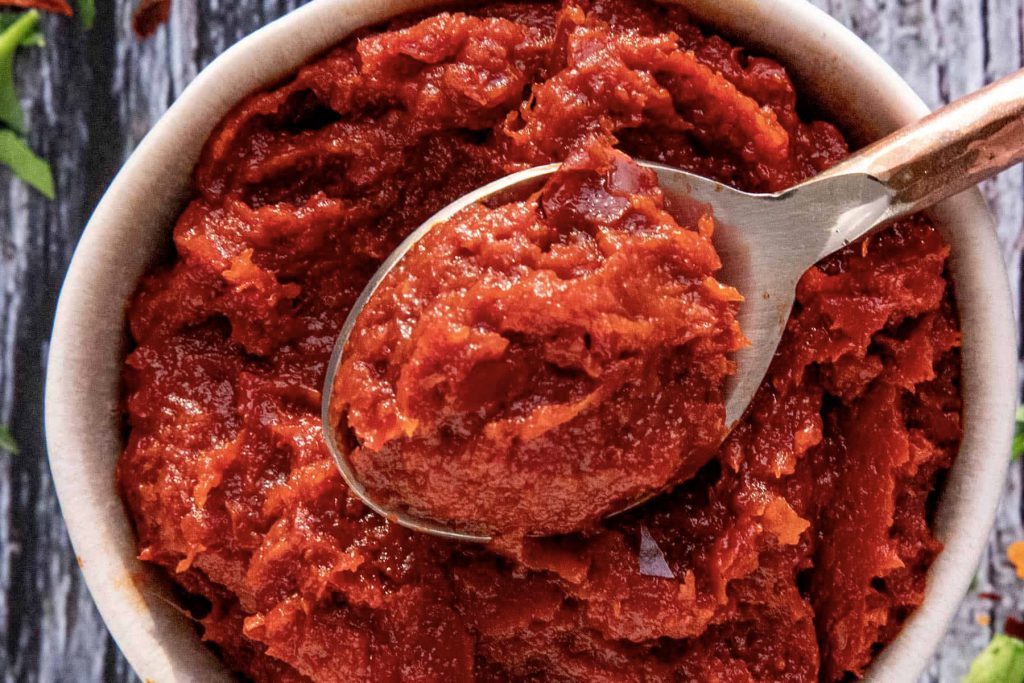
Biber Salçası (red pepper paste) is traditionally made by drying the peppers in the sun for days, but that’s not always possible. This is Özlem Warren’s shortcut method for making red pepper paste at home on the stovetop. It takes a little time, but it’s well worth it.
Ingredients
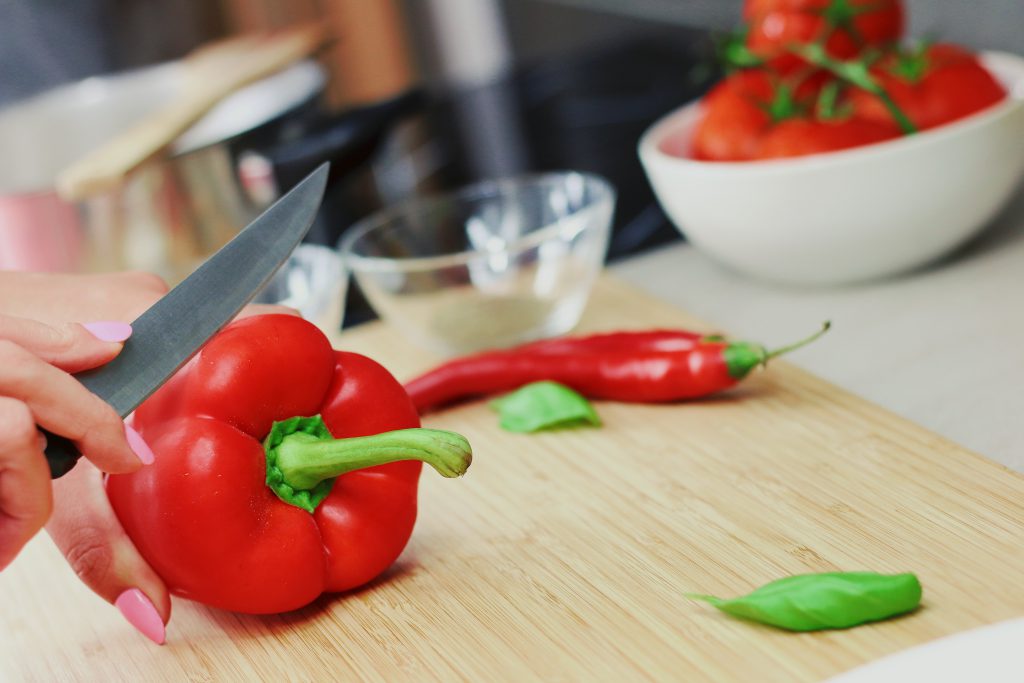
6 firm red bell peppers, trimmed, seeds removed, and cut into 1 1/2-inch chunks
1 1/2 cups hot water
3 small red chili peppers, trimmed, seeds removed, and finely chopped (use a few more if you like it spicier)
2 teaspoons kosher salt
1 tablespoon extra virgin olive oil
Method
Soften the bell peppers. Place the red bell peppers and a splash of hot water in a large, heavy, lidded pan. Set over medium heat and cook, stirring often, for about 25 minutes. Gently press and turn the peppers as you stir; they will begin to break down and soften, and most of the liquid will be absorbed.
Soften the chilli peppers. Add the chilli peppers and continue cooking over medium-low heat for another 10 minutes, stirring regularly. By the end, the peppers should be fully softened and most of the moisture evaporated. Turn off the heat and leave to cool for 5 minutes.
Process the paste. Transfer the cooked peppers to a food processor and blend until you have a mostly smooth purée (a little texture is fine).
Reduce the paste. Return the purée to the pan, add the salt, and cook over low heat for a further 30–35 minutes. Stir frequently to prevent burning, until the excess moisture has evaporated. The mixture will reduce by about half and thicken into a soft paste. Remove from the heat.
Store. Spoon the paste into a clean glass jar, pressing it down gently to remove air pockets. Pour a thin layer of extra virgin olive oil over the top, then seal with a lid. Allow to cool completely before storing in the refrigerator for up to 3 weeks.
Common Culinary Uses:
Dips and Spreads: Mixed with walnuts, olive oil, and breadcrumbs for muhammara; mixed with yogurt for a mezze dip; or spread directly on toast with feta cheese.
Marinades and Sauces: Added to olive oil, garlic, and spices (cumin, coriander) for chicken or lamb kebabs. It brings rich, savory flavor to pasta sauces and stir-fries.
Soups and Stews: Used as a base in soups like Ezo Gelin, or stirred into casseroles, pasta, and grain dishes for a deeper color and taste.
Baked Goods & Breakfast: Used to make biberli ekmek (flatbread with pepper paste, onions, and spices) or spread onto bread during a traditional Turkish breakfast (kahvaltı tabağı).
Flavour Booster: Used just like tomato paste to enhance stews, filling for dolma (stuffed vegetables), and savory pastries.