By Haluk Direskeneli
A Delicate Balance Between Cultural Revival and Carrying Capacity
One of Istanbul’s most distinctive island communities, Heybeliada has recently returned to public attention through two major developments. Statements indicating that the long-closed Heybeliada Greek Orthodox Seminary may reopen following extensive restoration work, together with ongoing plans to repurpose the historic Heybeliada Sanatorium for Islamic religious education and youth activities, have sparked a renewed debate about the island’s future.
These developments represent far more than the restoration of two historic buildings. They also raise broader questions concerning cultural heritage preservation, public use, diplomatic symbolism, tourism pressure, and the long-term sustainability of island life.
Reviving Historic Institutions
Founded in 1844 to educate Orthodox clergy, the Heybeliada Seminary suspended its educational activities in 1971 following changes in Turkey’s higher education legislation. Over the decades, the institution retained symbolic significance both in the context of Turkey’s minority policies and in Turkish–Greek relations. Today, preparations for its reopening are being closely followed not only from a religious perspective, but also as an important matter of cultural diplomacy.
Meanwhile, the historic Heybeliada Sanatorium occupies a special place in Turkey’s modern medical history. Opened in 1924 as a tuberculosis hospital, it served for decades as one of Istanbul’s most important healthcare institutions. After its closure in 2005, the complex gradually fell into neglect. Its planned reuse is therefore seen by many as an opportunity to prevent further deterioration and preserve an important historical structure.
Indeed, as seen with many heritage buildings across Istanbul, structures that remain in continuous use and possess an economic function are generally easier to maintain. Vacant buildings, by contrast, often face growing risks of decay, vandalism, and unauthorized occupation.
Expectations of Cultural and Economic Activity
The reopening of both institutions could introduce a new level of human activity to the island. Students, academics, visitors, technical personnel, and cultural events may contribute to a revival of the local economy.
Small businesses, guesthouses, cafés, and transportation services may especially benefit from renewed economic vitality. At the same time, the island’s historical identity — shaped by monasteries, educational institutions, and a multicultural past — could once again become more visible and internationally recognized.
The reopening of the Seminary may also be interpreted abroad as a positive signal regarding Turkey’s approach to cultural pluralism and religious heritage. Nevertheless, issues carrying such symbolic weight can also become part of wider diplomatic discussions, and this possibility should not be overlooked.
The Fundamental Question: Can the Island Sustain This Burden?
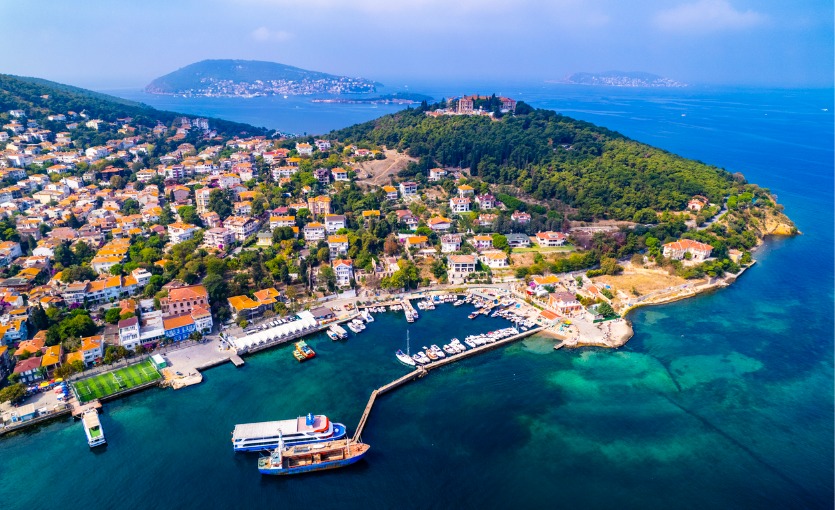
Yet the issue cannot be viewed solely through the lens of cultural revival. With a limited surface area of approximately 2.34 square kilometres, Heybeliada has long faced debates regarding its physical and ecological carrying capacity.
During the summer months, the island already experiences dramatic increases in population density. Day-trip tourism, ferry congestion, electric vehicle traffic, water shortages, and waste management problems are among the concerns frequently voiced by residents.
Particularly sensitive issues include:
- ferry and pier capacity,
- congestion caused by electric vehicles,
- overcrowding on narrow roads,
- water and sewage infrastructure,
- waste collection systems,
- noise and environmental pressure.
With the full operation of new institutional activities, not only visitor numbers but also logistical traffic, maintenance services, transportation demands, and event intensity are likely to increase. Unplanned growth could gradually undermine the fundamental character of island life.
The concept of “carrying capacity,” widely debated today in many environmentally sensitive tourism destinations around the world, is no longer merely theoretical for Heybeliada. It has become a concrete planning necessity.
What Many Fear Losing: The Island’s Quietness
Beyond infrastructure and planning debates, many long-time residents feel a deeper and more emotional concern: the gradual disappearance of the island’s long-preserved sense of tranquility.
An atmosphere once defined by the absence of engine noise, the scent of pine trees carried by the wind, and unhurried evening walks along the waterfront now risks giving way to something increasingly crowded, hurried, and noisy.
Perhaps in the future many people will look back and remember a simpler, calmer, and more balanced way of life. Some residents may even begin asking themselves: “Why did we allow so much pressure to build on the island?”
Because certain losses are not recognized when they begin — they are noticed only after silence has completely disappeared.
The true value of Heybeliada lies not only in its historic buildings, but also in its slower rhythm of life, its calm atmosphere, and its human scale. If that atmosphere cannot be preserved, then even successful physical restorations may come at the cost of damaging part of the island’s spirit in irreversible ways.
A Rational Balance Between Preservation and Use
For this reason, the discussion should move beyond the simplistic extremes of either “fully supporting” or “completely opposing” these projects. Instead, it requires a scientific, data-based, and carefully balanced approach.
Comprehensive infrastructure impact assessments should be conducted in advance. Water consumption, energy demand, waste generation, transportation intensity, and emergency response capacity all need to be realistically evaluated.
In addition, mechanisms such as:
- visitor management plans,
- controlled event schedules,
- reservation-based visitation systems,
- environmental protection measures,
- and meaningful participation by local government and civil society
should all be seriously considered.
The value of the Princes’ Islands derives not only from their historical architecture, but also from their peaceful rhythm of life, natural landscape, and human-scale urban character. Preservation policies therefore cannot be limited to building restoration alone; they must encompass the island ecosystem and way of life as a whole.
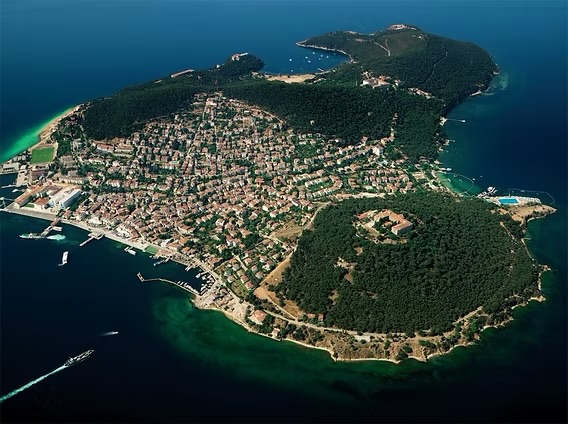
Today, Heybeliada stands at the threshold of a new era. The reopening of the Seminary and the renewed use of the Sanatorium offer important opportunities for cultural heritage preservation and international visibility. At the same time, however, they represent a serious test for the island’s infrastructure and quality of life.
The key to success lies not in short-term political or economic gains, but in a long-term commitment to sustainability. Through transparent, participatory, and scientifically grounded planning, it may still be possible both to preserve these historic institutions and to safeguard the quality of life of island residents.
Otherwise, even projects that begin with good intentions may eventually become a burden that Heybeliada can no longer carry.