By Aditya Lakher
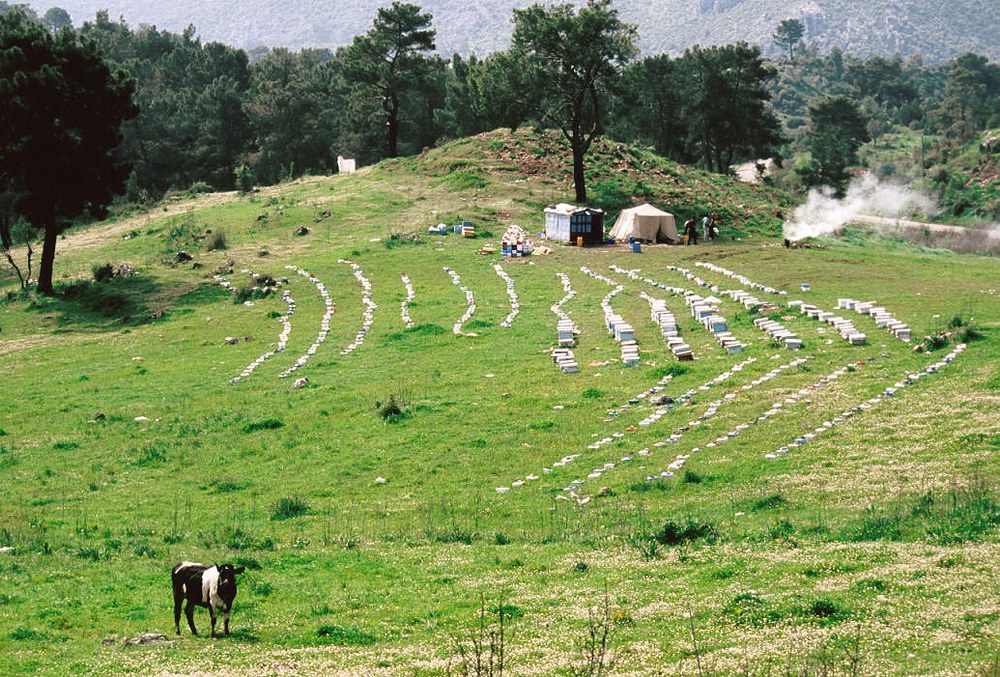
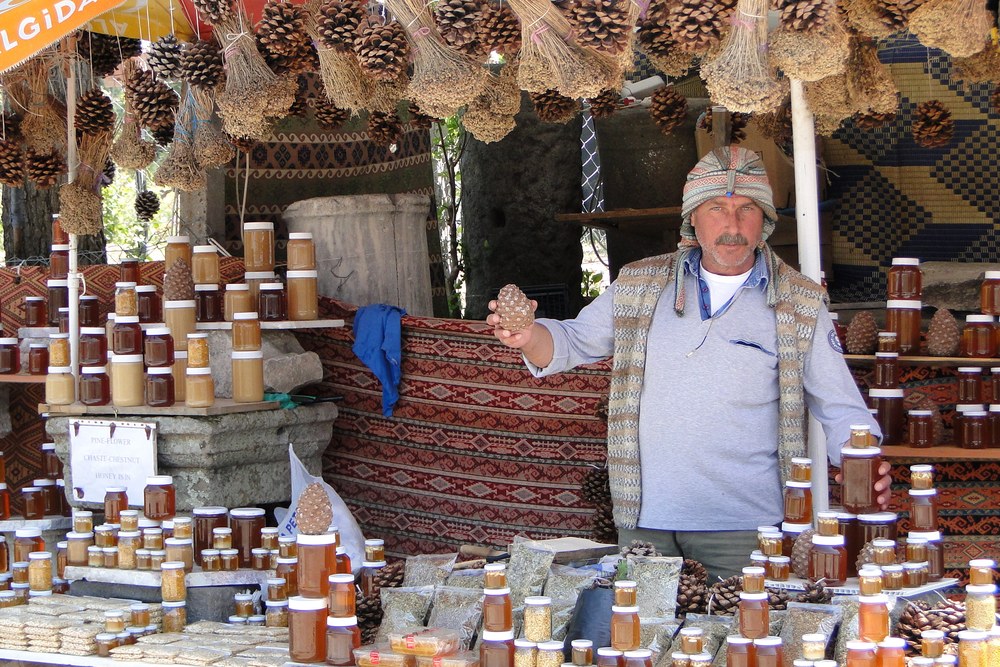
In autumn, jars of çam balı (pine honey) fill market stalls across Muğla, and with good reason. Turkey produces most of the world’s pine honey, and much of the country’s production comes from this province, where red pine forests cover the coast and climb into the surrounding hills.
What is pine honey?
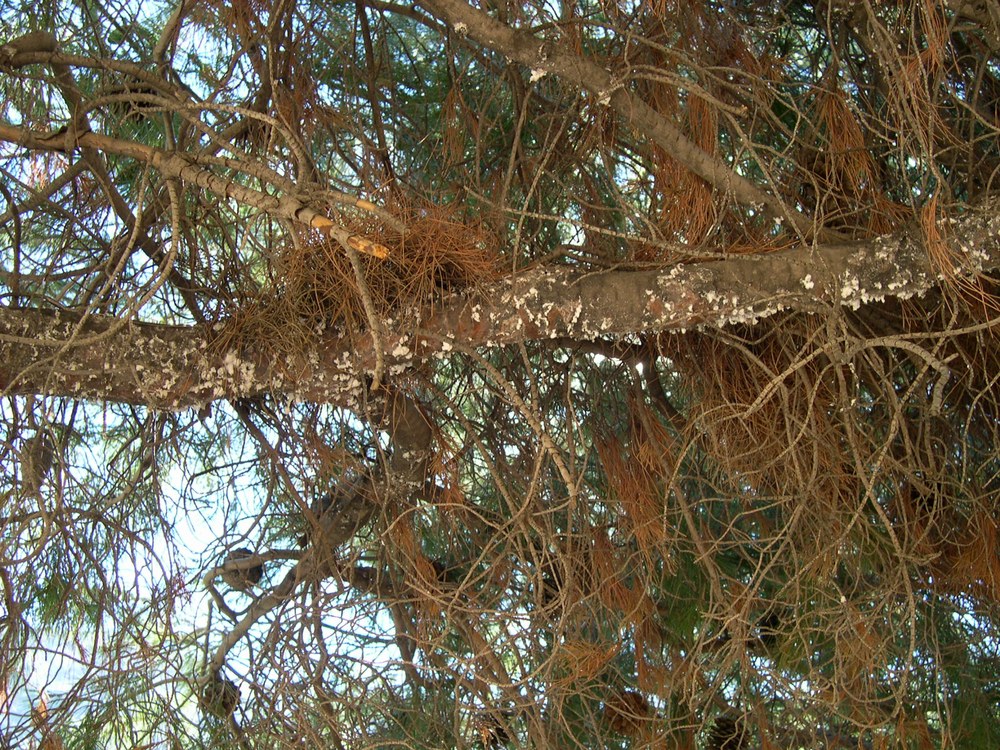
Pine honey is not made from flowers. Instead, a small sap-sucking insect, the giant pine scale (Marchalina hellenica), lives on the bark of red pine trees and produces a sweet liquid called honeydew. Bees collect this honeydew rather than flower nectar.
In Muğla, honeydew flows most abundantly between mid-September and the end of November, meaning much of the year’s pine honey is produced in autumn.
The result is a darker, less sweet honey than many floral varieties, with a resinous, slightly woody flavour that pairs well with yoghurt and white cheese at breakfast.
Since 2018, Muğla pine honey has held registered designation of origin status in Turkey, following an application by the province’s beekeepers’ association. Fethiye is one of the twelve districts where it can be produced.
Local beekeepers have good reason to protect this valuable resource. The devastating wildfires of 2021 burned through some of the forests on which pine honey production depends.
Taking it home
If you are flying back to the UK, you can bring up to 2kg of honey per person from Turkey, according to GOV.UK. That is equivalent to four 500g jars.
Honey is treated as a liquid at airport security, so containers larger than 100 ml must normally be packed in hold luggage. Keep the jars sealed and labelled, and pack them carefully: glass and suitcases are not always a good combination.
Wrapping each jar in a sealed plastic bag, cushioning it with clothing and placing it in the middle of your suitcase will help protect it during the journey. Keep your receipt, too, in case you are asked about the honey’s origin.
Comb honey is the one to watch this year. Since 4 September, Great Britain has suspended imports of comb honey from Turkey following the discovery of a parasitic bee mite in Artvin.
Defra’s notice describes the restriction as applying to commercial imports, while the published GOV.UK guidance for travellers has not changed. It is therefore unclear whether the restriction also covers a piece of honeycomb carried in a holidaymaker’s suitcase.
Until the position is clarified, the safest option is to buy honey in jars rather than on the comb. If you are unsure about anything you are carrying, GOV.UK advises travellers to use the red channel and ask for guidance.
Travellers flying to other destinations face different rules. Ireland and other EU countries generally allow up to 2 kg of honey per person arriving from outside the EU, although this allowance is shared with certain other products, including infant milk and baby food. Families travelling with formula should take this into account.
Canada allows travellers to bring in up to 20 kg of honey, while the United States permits honey for personal use, provided it is declared. Australia inspects honey on arrival, and New Zealand does not permit honey imports from Turkey.
Always check the latest official guidance before travelling, as import rules and restrictions can change.
Pine honey is not deli bal
The honey that requires considerably more caution is deli bal, commonly known in English as mad honey.
It comes from the Black Sea region, particularly around Rize and Artvin, where bees feed on rhododendron flowers. The nectar contains naturally occurring toxins called grayanotoxins, which can pass into the honey.
Locally, small quantities have traditionally been used as a folk remedy. However, consuming too much can cause dizziness, a significant drop in blood pressure and an abnormally slow heartbeat. Turkish hospitals treat cases of mad honey poisoning every year.
Germany’s Federal Institute for Risk Assessment advises against consuming rhododendron honeys, particularly those originating from the Black Sea region.
You may come across deli bal for sale well away from the Black Sea, sometimes marketed as a curiosity or a natural high. It can look much like other dark honeys, making the label and the seller important clues to its identity.
Muğla’s pine honey is an entirely different product. It comes from pine forests rather than rhododendron flowers and is not the honey associated with these poisoning cases.
If a jar is sold as deli bal, mad honey or rhododendron honey, it is not pine honey. It is best left on the shelf, particularly by pregnant people and anyone taking heart or blood-pressure medication.
Anyone who feels faint, dizzy or sick after consuming mad honey should seek medical attention promptly. Doctors are familiar with the effects of grayanotoxin poisoning, and many people recover within a day, although serious complications can occur.
Aditya Lakher edits All About Mad Honey, which maintains a guide to honey import rules for travellers in 22 countries, with each country’s requirements checked against official government sources.
Find out more at: allaboutmadhoney.com/guides/bringing-honey-home-customs-rules