Imagine following a trail where mountain paths lead to secluded turquoise bays, traditional villages sit among olive groves and ancient ruins appear around the next bend. This is the Lycian Way, one of Turkey’s most remarkable long-distance walking routes and an unforgettable way to discover the country’s Mediterranean coastline.
Stretching across the ancient lands of Lycia, the trail combines breathtaking scenery with thousands of years of history. Hikers encounter rock-cut tombs, Roman theatres, forgotten settlements and spectacular coastal viewpoints, often far from the usual tourist routes.
Whether you are planning a multi-day trekking adventure or simply want to explore a few of its most beautiful sections, understanding the route, its stages, historical attractions and accommodation options will help you make the most of the experience.
Where Is the Lycian Way?
The Lycian Way follows Turkey’s southwestern Mediterranean coastline, beginning at Ovacık, near Fethiye, and finishing at Geyikbayırı, approximately 20 kilometres (12 miles) from Antalya.
It was established by British writer and explorer Kate Clow and officially opened in 1999, becoming Turkey’s first waymarked long-distance hiking trail.
The original route is generally described as approximately 540 kilometres (335 miles) long. However, with additional paths and alternative routes now included, the wider network can extend to around 760 kilometres (470 miles).
This is no ordinary coastal stroll. The terrain ranges from relatively gentle countryside paths to steep mountain climbs, rocky tracks and challenging descents. Some sections offer spectacular sea views, while others take walkers deep into pine forests and remote mountain settlements.
The good news is that you don’t have to tackle the entire trail. Its individual sections make it possible to plan shorter walks and discover different parts of the Lycian coastline at your own pace.
Exploring the Lycian Way: Route and Stages
There isn’t one universally agreed way of dividing the Lycian Way. Depending on whether alternative routes and extensions are included, walking guides typically identify between 25 and 33 stages.
Some particularly popular sections include the opening stretch around Fethiye and Ovacık, the dramatic coastal paths between Kabak and Alınca, and the historic landscapes surrounding Olympos and Çıralı.
Distances are approximate, and walkers should be aware that some paths have changed over the years because of road construction and quarrying. The Culture Routes Society has previously documented significant rerouting, making an up-to-date guidebook and trail map essential before setting off.
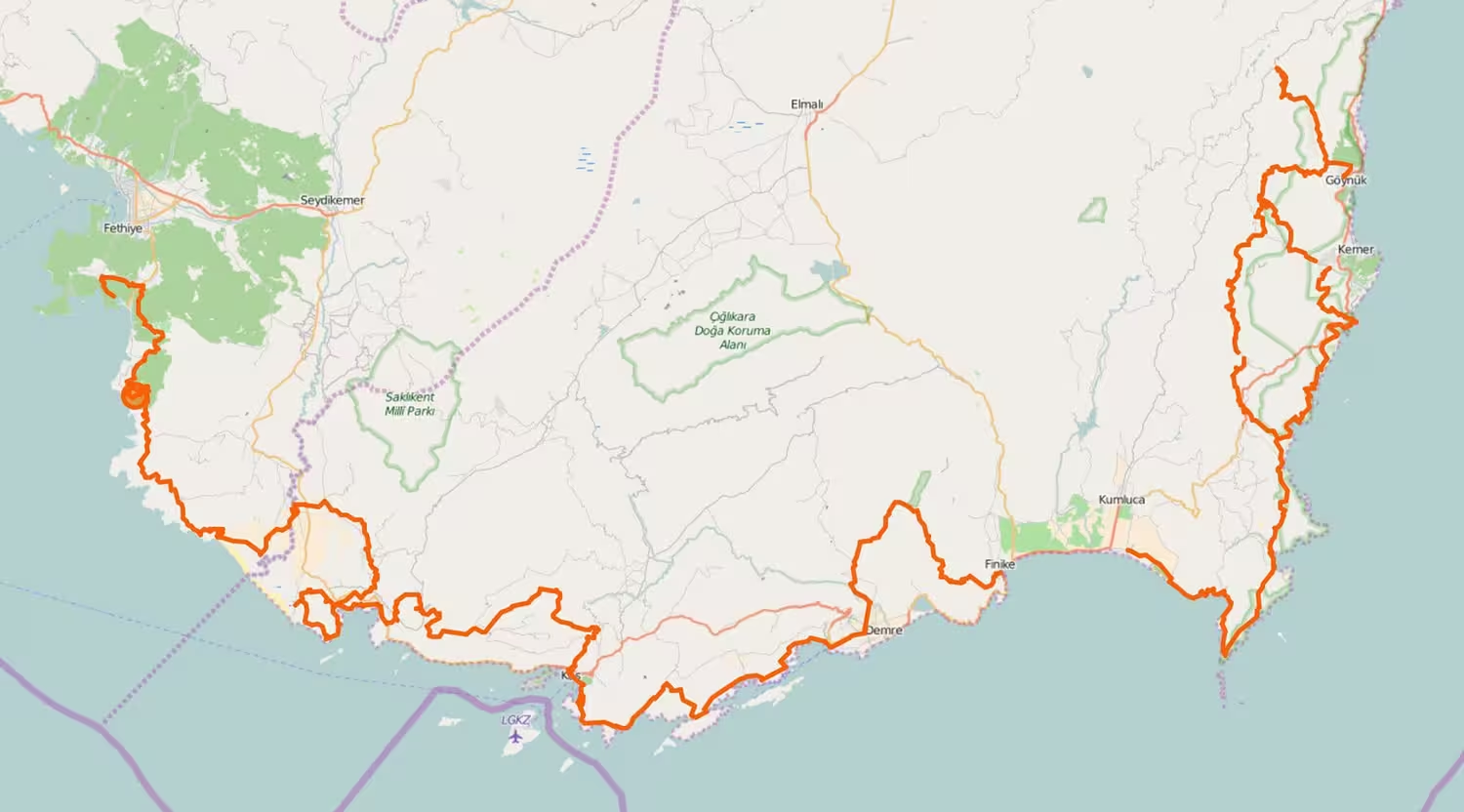
Lycian Way — 30 Stages: From gentle coastal walks to demanding mountain crossings. Find your stage.
Discovering Ancient Cities Along the Lycian Way
One of the greatest attractions of the Lycian Way is the opportunity to explore landscapes once inhabited by thriving ancient civilisations.
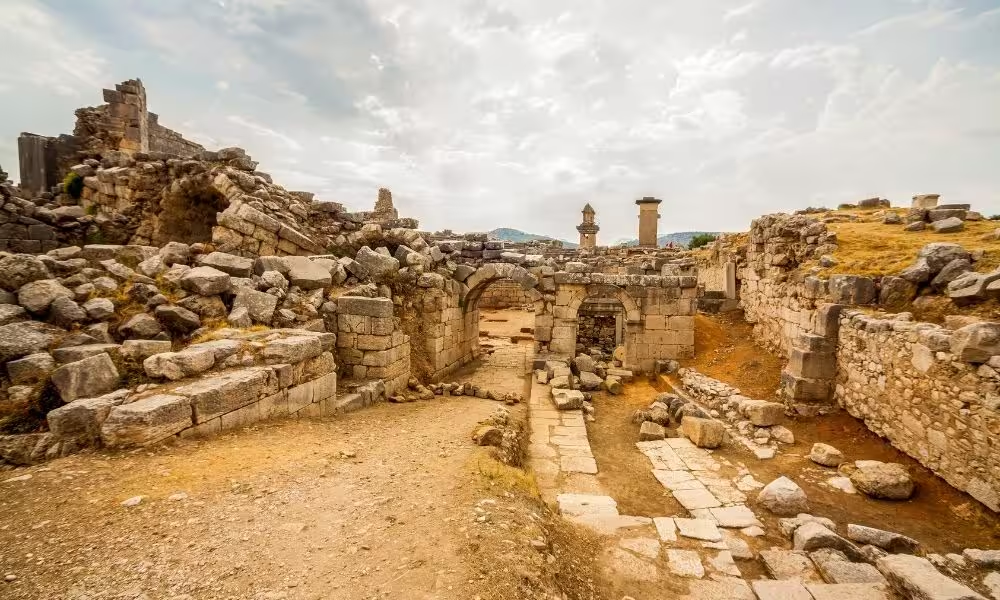
The trail passes numerous archaeological sites, some remarkably well preserved, while others are atmospheric ruins tucked away among pine forests, hillsides and coastal villages.
From monumental rock-cut tombs and ancient theatres to forgotten settlements and historic harbours, these landmarks offer a fascinating insight into the world of ancient Lycia.
Along the route, walkers can discover historic settlements including Sidyma, Pydnai, Patara, Antiphellos, Apollonia, Aperlai, Theimussa (Üçağız), Simena, Myra and Idyros, among many others.
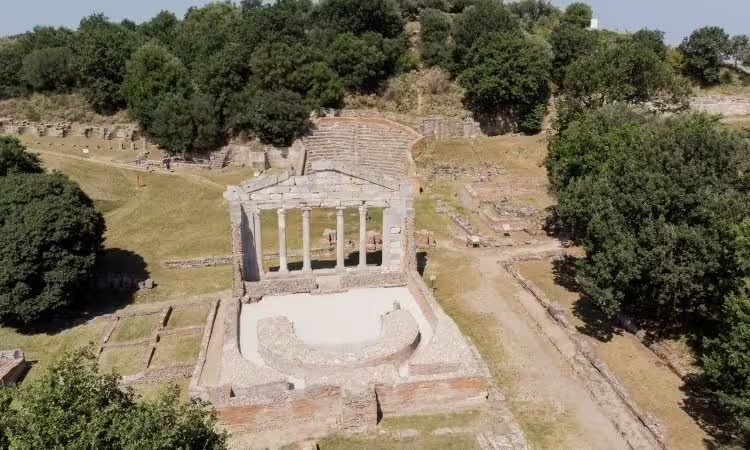
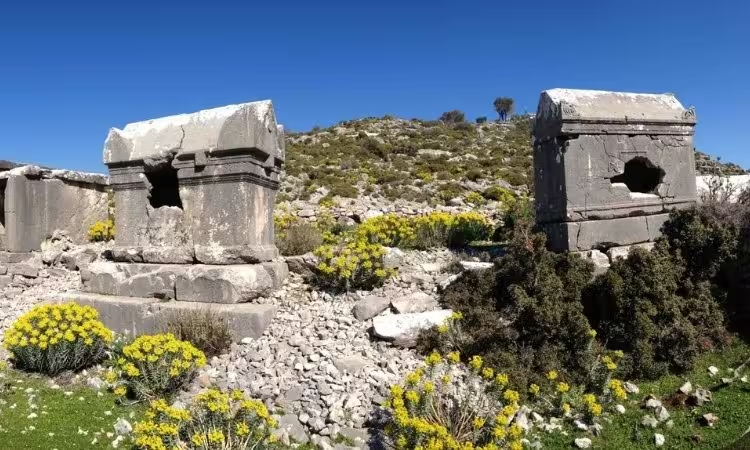
One of the most significant stops is Patara, an important ancient Lycian city and the meeting place of the Lycian League. Its impressive archaeological remains include the restored Lycian Council Building (Bouleuterion), where representatives of the federation once gathered. The building is a remarkable reminder of the region’s early traditions of representative government.
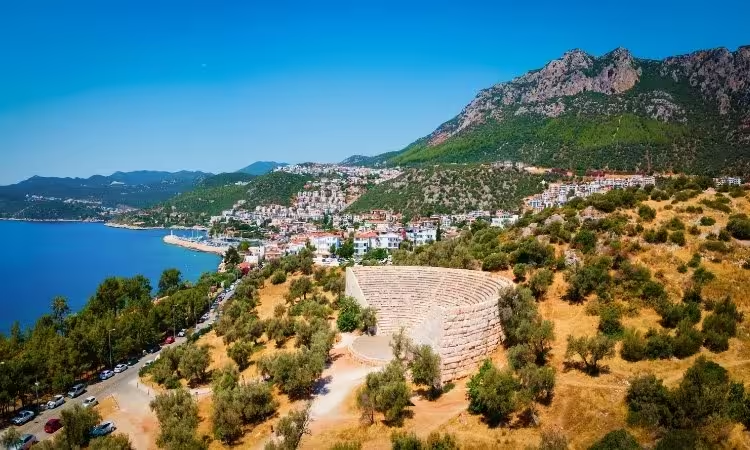
From Patara, the trail continues towards Kalkan and Kaş, taking walkers through beautiful countryside and spectacular coastal scenery. Modern-day Kaş was once the ancient city of Antiphellos, whose Lycian heritage can still be seen in its historic monuments, rock tombs and ancient theatre.
The surrounding coastline provides some of the most memorable scenery on the route, including the famous Kaputaş Beach and the turquoise waters around Kekova. Here, visitors can explore ancient coastal settlements such as Apollonia, Aperlai and Simena, better known today as Kaleköy. Parts of the ancient settlement around Kekova were submerged following earthquakes, creating the fascinating underwater ruins for which the area is famous.
Continuing eastwards, the trail reaches Demre, home to two important historical sites: Myra and Andriake.
Andriake was the ancient harbour of Myra and an important trading port during the Roman period. Among its surviving structures is the impressive Granarium of Hadrian, a Roman grain warehouse that now houses the Museum of Lycian Civilisations.
Nearby, the ancient city of Myra is famous for its spectacular rock-cut tombs carved into the cliffs above the settlement and its impressive Roman theatre, which could accommodate approximately 11,500 spectators.
Demre also has an important connection to the story of Saint Nicholas, the fourth-century Christian bishop whose generosity inspired the legend of Santa Claus. Born in Patara, he served as Bishop of Myra, where the historic Church of St Nicholas still stands.
Mighty Olympos
Further along the Mediterranean coast, walkers reach Olympos, once one of Lycia’s important harbour towns.
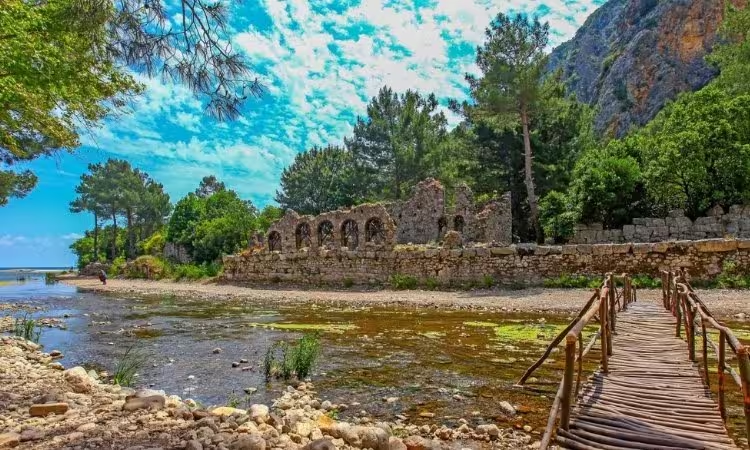
The city became notorious as a stronghold for pirates during the first century BC, until Roman commander Servilius Isauricus captured it in 78 BC. Today, visitors can explore a fascinating collection of Hellenistic, Roman and Byzantine ruins, set among lush vegetation on either side of a river.
A short distance inland is another natural wonder: Yanartaş (the Chimaera Flames). Here, natural gas escapes through cracks in the rocky mountainside, producing small flames that have burned for centuries. Located near Çıralı, on the slopes of Mount Chimaera, the site is steeped in mythology and is particularly atmospheric after dark.
The journey continues towards Phaselis, an ancient city renowned for its three natural harbours and important maritime trading history. Situated near modern-day Tekirova, Phaselis was once a thriving commercial centre linking the Mediterranean with the wider ancient world. Its impressive remains include a theatre, an aqueduct, a main street and the ruins of public buildings.
Beyond Phaselis, the Lycian Way continues through mountain landscapes and traditional settlements towards the Antalya region, passing further historical sites including Idyros before reaching the trail’s eastern end at Geyikbayırı.
A Journey Through More Than 2,000 Years of History
The Lycian Way is much more than a hiking trail. It is a journey through one of the Mediterranean’s most fascinating historical landscapes, connecting ancient cities, forgotten harbours, mountain settlements and archaeological treasures.
For those who enjoy combining walking, history and spectacular scenery, it offers an extraordinary opportunity to discover the legacy of ancient Lycia at every turn.
Where to Stay Along the Lycian Way
Planning accommodation is an important part of organising a Lycian Way adventure, particularly if you intend to walk several consecutive stages.
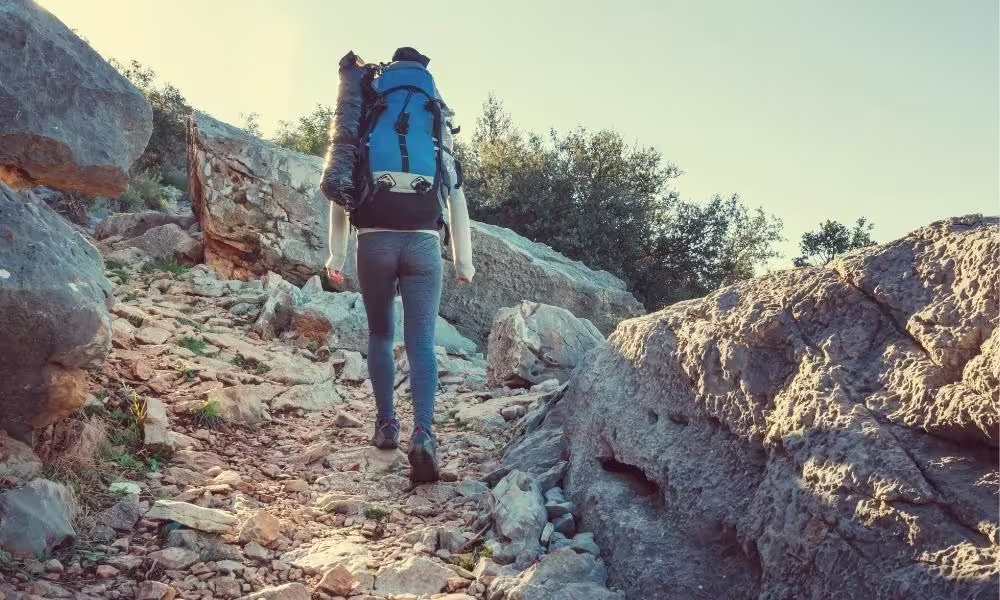
Fortunately, there is a good variety of places to stay along the route. Options range from small family-run guesthouses and traditional pensions (pansiyon) to boutique hotels, mountain lodges and campsites.
Some villages offer accommodation in traditional stone houses, providing an opportunity to experience a little more of local life along the way.
Popular overnight stops and accommodation bases include:
- Fethiye: A convenient starting point with plenty of accommodation, restaurants and facilities.
- Faralya and Kabak: Ideal for enjoying dramatic coastal scenery and peaceful surroundings.
- Patara: A good base for combining walking with visits to the beach and nearby archaeological sites.
- Kaş: A lively coastal town with a wide choice of hotels, guesthouses and restaurants.
- Demre and Finike: Useful stopping points for exploring the central sections of the route.
- Olympos and Çıralı: Popular destinations offering a mix of nature, history and seaside accommodation.
- Göynük: A useful base towards the Antalya end of the trail.
For those who prefer sleeping under the stars, camping is another option. Kabak Bay, Patara, Olympos and Çıralı are among the better-known locations for camping in the region.
It is worth arranging accommodation in advance during busy periods, particularly in smaller villages where the number of available rooms may be limited.
When Is the Best Time to Walk the Lycian Way?
Choosing the right season can make a significant difference to your experience.
Spring and autumn are generally the best times to explore the Lycian Way. From March to May, the countryside is greener, wildflowers appear along the paths and temperatures are usually more comfortable for walking.
October and November also offer excellent conditions, with milder temperatures and fewer visitors than during the peak summer months.
Summer can be challenging, particularly on exposed coastal sections where temperatures rise considerably and shade is limited. Winter brings cooler conditions, and higher mountain sections may experience snow and difficult weather.
Whichever season you choose, good walking footwear, sufficient drinking water, sun protection and a reliable route map are essential.
A Walking Adventure Through the Heart of Ancient Lycia
The Lycian Way offers much more than a long-distance hiking challenge. It is an opportunity to experience a different side of Turkey, where spectacular Mediterranean scenery meets fascinating history and traditional village life.

Whether you choose a short coastal walk, spend several days exploring ancient settlements or take on the full trail, every section offers something different.
From the harbour towns of Fethiye and Kaş to the ancient ruins of Xanthos and Olympos, this is a journey that rewards those willing to slow down, follow the paths and discover the stories hidden along the way.
Further information and sources:
Culture Routes Society – The Future of the Lycian Way
Turkey Ministry of Culture and Tourism – Olympos Archaeological Site
Listelist – Lycian Way: Stages and Ancient Cities
Antalya Metropolitan Municipality – The Lycian Way
Lycian Way – Trail Guide and Ancient Sites
You Might Also Like: